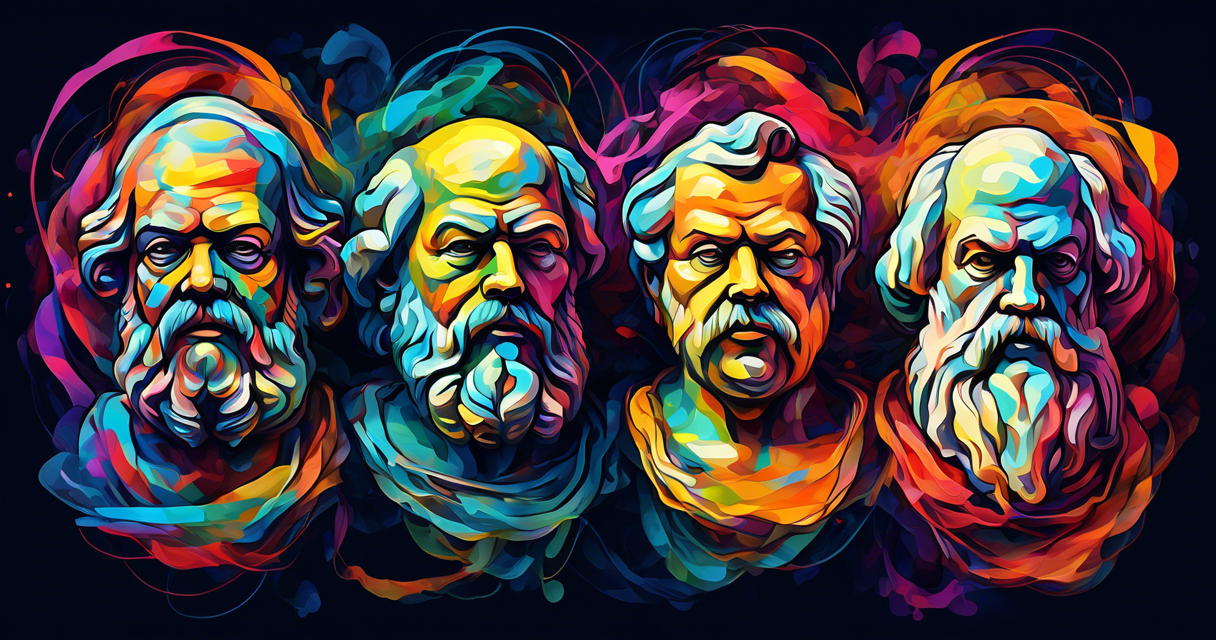
Western Political Thought (Plato to Marx)

Western Political Thought (Plato to Marx)

1 Significance of Western Political Thought

  1. What is Political Thought?

  2. Distinction between Political Thought, Political Theory and Political Philosophy

  3. Relationship between Political Thought and Political Science
  4. Framework of Political Thought
  5. Western Political Thought, Political Institutions and Political Procedures
  6. Western Political Thought, Political Idealism and Political Realism
  7. Characteristic Features of the Great Works of Western Political Thought
  8. Relevance of Western Political Thought

2 Plato

  1. The Man and His Times
  2. His Works
  3. His Methodology
  4. Socratic Base
  5. Theory of Ideas
  6. Theory of Justice
  7. Scheme of Education
  8. Community of Wives and Property
  9. Ideal State: The Ruling Class/Philosophic Ruler
  10. Plato’s Adversaries
  11. Plato’s Place in Western Political Theory

3 Aristotle

  1. Introduction
  2. Introducing Aristotle
  3. Philosophical Foundations of Aristotle’s Political Theory
  4. Plato and Aristotle
  5. Politics and Ethics
  6. Theory of Justice
  7. Property, Family and Slavery
  8. Theory of Revolution
  9. Theory of State
  10. Evaluation of Aristotle’s Political Theory
  11. Influence

4 St. Augustine & St. Thomas Aquinas

  1. Introduction
  2. Life and Work
  3. Civitas Dei Versus Civites Terrena
  4. Justice and the State
  5. State, Property, War and Slavery
  6. Augustine’s Influence
  7. St. Thomas Aquinas and the Grand Synthesis
  8. Law and the State
  9. Church and the State

5 Niccolo Machiavelli

  1. Introduction
  2. Machiavelli: A Child of His Time
  3. Methods of Machiavelli’s Study
  4. Machiavelli’s Political Thought
  5. Concept of Universal Egoism
  6. The “Prince”
  7. Machiavelli’s Classification of Forms of Government
  8. The Doctrine of Aggrandisement
  9. Evaluation

6 Thomas Hobbes

  1. Life and Times
  2. The State of Nature and Natural Rights
  3. Laws of Nature and the Covenant
  4. The Covenant and the Creation of the Sovereign
  5. Rights and Duties of the Sovereign
  6. The Church and the State
  7. Civil Law and Natural Law

7 John Locke

  1. Life and Works
  2. Some Philosophical Problems
  3. The State of Nature and Natural Rights
  4. Social Contract and Civil Society
  5. Consent, Resistance and Toleration
  6. The Lockean Legacy

8 Jean Jacques Rousseau

  1. Life and Times
  2. Revolt against Reason
  3. Critique of Civil Society
  4. Social Contract
  5. Theory of General Will
  6. General Will as the Sovereign
  7. Critical Appreciation

9 Edmund Burke

  1. Restraining Royal Authority
  2. Ireland
  3. East India Company
  4. American Colonies
  5. Criticism of the French Revolution
  6. Critique of Natural Rights and Social Contract
  7. Limits of Reason
  8. Citizenship and Democracy
  9. Religion and Toleration
  10. Criticisms of Burke

10 Immanuel Kant

  1. Representative of the Enlightenment
  2. Kant’s “Copernican Revolution in Metaphysics”
  3. Transcendental-Idealist View of Human Reason
  4. Formulations of the Categorical Imperative
  5. The Universal Law of Right (Recht) or Justice
  6. Property, Social Contract, and the State
  7. Perpetual Peace
  8. Concluding Comments

11 Jeremy Bentham

  1. Life and Times
  2. Utilitarian Principles
  3. Bentham’s Political Philosophy
  4. The Panopticon

12 Alexis de Tocqueville

  1. On Democracy, Revolution and the Modern State
  2. Religion
  3. Women and Family

13 J.S. Mill

  1. Life and Times
  2. Equal Rights for Women
  3. The Importance of Individual Liberty
  4. Representative Government
  5. Beyond Utilitarianism

14 George Wilhelm Friedrich Hegel

  1. Life and Times
  2. Spiritual Ancestry
  3. Idealism
  4. Dialectical Method
  5. Philosophy of History
  6. Theory of State
  7. Theory of Freedom of the Individual

15 Karl Marx

  1. Life and Times
  2. Theory of Alienation
  3. Dialectics
  4. Theory of Historical Materialism
  5. Theory of Class War
  6. Theory of Surplus Value
  7. Theory of Revolution
  8. Dictatorship of the Proletariat
  9. Vision of a Communist Society